Controls & Investment
Make Defensible Decisions About Cybersecurity Controls
Controls & Investment helps organisations understand what they are protecting, which controls are already in place, what those controls cost to operate, and where change is most justified. It creates a governed decision layer between quantified risk and delivery execution, supporting clearer prioritisation, investment, and control change decisions.

What Controls & Investment Helps You Decide
Are we investing in the right controls for the risks we actually face?
Spartacus Insights' Controls & Investment helps organisations decide where security control change is justified, where existing protection is sufficient, and where additional investment is most likely to improve risk coverage across the assets they are protecting.
It supports clearer control decisions by connecting assets, quantified risk, active controls, proposed controls, and cost into one governed view, enabling prioritisation that can be explained, repeated, and defended.
Why Security Control Investment Needs Governance
Control investment decisions are difficult because organisations rarely have a clear view of how assets, quantified risk, active controls, and operating cost connect in practice. As a result, control change is often shaped by instinct, generic best practice, or maturity findings alone rather than a more connected and strategic view of what protection is really needed.
Controls & Investment provides the governed decision layer that sits between risk insight and delivery execution, helping organisations make more consistent, explainable, and economically grounded control decisions.
Aligning Assets, Risk, and Protection Spend
Controls & Investment brings together asset-level risk, control coverage, and protection spend into a single, coherent context. This gives organisations a clearer view of what is being protected, how materially it is exposed, which controls are already in place, and what those controls cost to operate.
It becomes easier to judge whether protection is proportionate, where coverage is misaligned, and where additional control investment is most justified.


Asset-Level Risk (£)
Identified business assets are stress-tested against defined cyber risk scenarios using the Spartacus Standard Risk engine, establishing quantified loss exposure at asset level.
Active Controls Deployed to Assets
A clear view is established of which security controls are actively in operation and how they are deployed to protect business assets.
Protection Spend by Asset (£)
Protection spend is surfaced at asset level by attributing the full cost of active controls - including human effort, software and licensing, and supporting infrastructure - to the business assets they protect.
Justified Control Change and Spend Priorities
When assets, quantified risk, active controls, and protection spend are visible together, control change becomes easier to justify. Organisations can see where protection is sufficient, where coverage is weak or misaligned, and where additional investment is most likely to improve protection in a meaningful way.
This creates a stronger basis for deciding where controls should be maintained, improved, reduced, or removed, and where protection spend should be rebalanced. It helps teams focus effort where it is most justified instead of relying on instinct, generic best practice, or maturity findings alone.
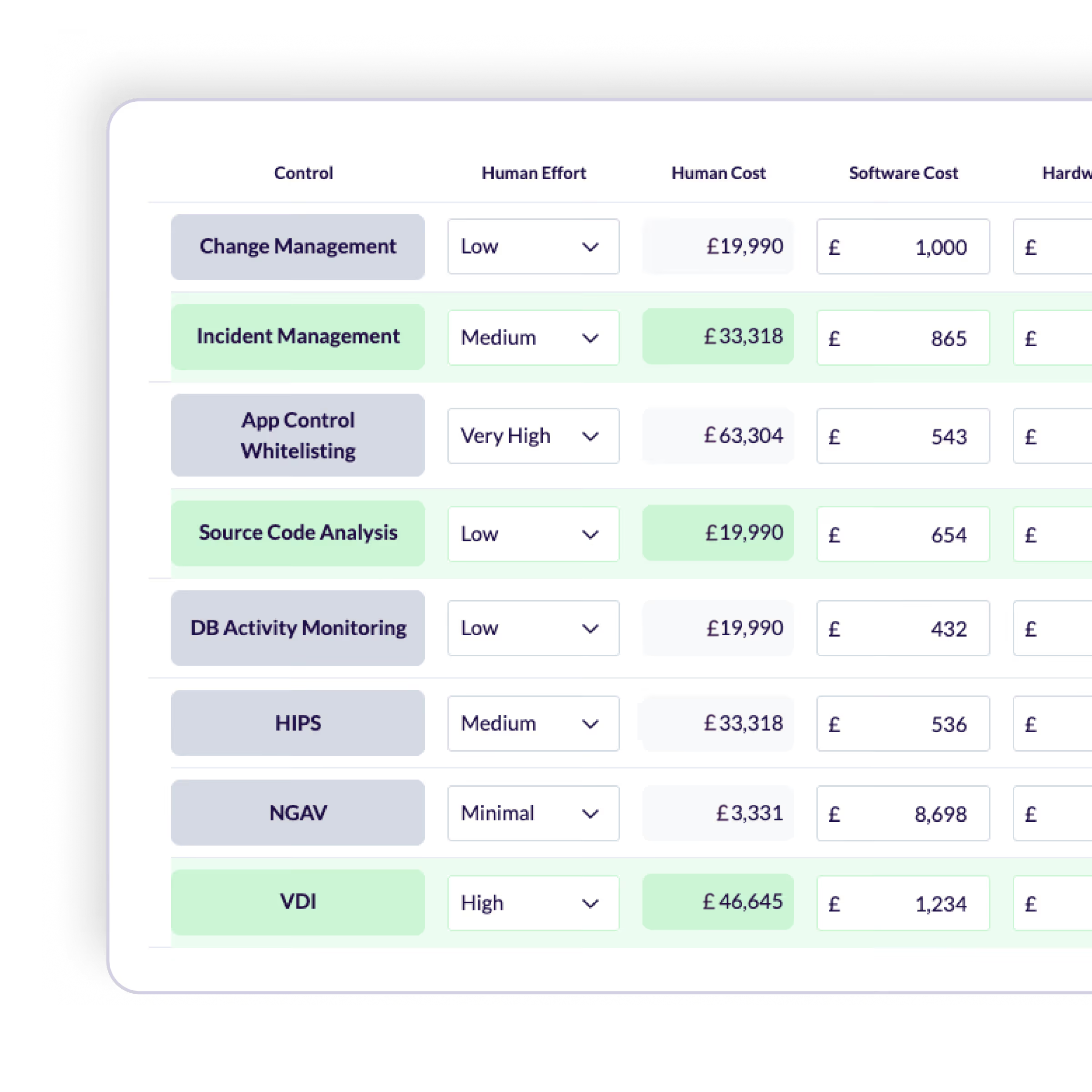

Recommended Projects for Delivery
Where additional controls are justified, Controls & Investment turns those decisions into recommended projects for delivery. This helps organisations move from control analysis into prioritised action while keeping asset context, quantified risk, control choice, and investment rationale connected.
Projects support structured planning and sequencing, but Spartacus Insights does not replace delivery execution. It provides a clearer bridge between decision-making and implementation planning.
Using Controls & Investment in Practice
Controls & Investment becomes most useful when organisations already understand their risk exposure and need to decide what to do next. It works alongside maturity assessments by adding a more decision-focused view of where control change and investment are most justified across protected assets.
For consultancies, it provides a more productised and repeatable way to turn quantified risk and assessment insight into clearer client conversations, prioritised action, and economically grounded control recommendations.
Who Controls & Investment Is For
Controls & Investment is designed for organisations and consultancies that need to make more defensible decisions about cybersecurity control investment, including:
CISOs and Heads of Security, Risk, and Compliance
security and technology teams accountable for control spend
consultancies delivering cybersecurity assurance and advisory services
When Controls & Investment Becomes Relevant
Controls & Investment becomes most useful when organisations:
have already completed maturity or framework assessments
need to decide what to maintain, change, or invest in next
manage complex or overlapping control landscapes
require clearer visibility of asset risk, control protection, and cost
Explore Product Decision Lenses
Explore productised capabilities that support clearer decisions across supplier assurance, quantitative risk, threat-informed protection, control investment and Custom Frameworks.