ISO 27001:2022
ISO 27001 Beyond Compliance
ISO 27001 is more than a certification exercise. At its best, it gives organisations a structured basis for governing information security, supporting leadership accountability, risk-informed decision-making, and stronger assurance for customers, regulators, and stakeholders.

Outcomes, Not Checklists
ISO 27001 is designed to help organisations build a more structured and managed approach to information security. It supports governance, leadership accountability, and continual improvement, rather than reducing security to a narrow compliance exercise.
In practice, that value is often lost when ISO becomes a document-heavy process focused mainly on passing reviews and collecting evidence. Spartacus helps keep ISO connected to broader business and delivery conversations, so clause and Annex A activity can support clearer assurance, stronger prioritisation, and more durable improvement programmes.
Scale Without Drift
As ISO 27001 assurance is delivered across teams, business units, clients, and repeat assessment cycles, delivery quality can become inconsistent. Interpretation varies, evidence handling drifts, and review outcomes become harder to compare or defend when the same standard is being used in different ways.
Spartacus provides a more structured and governed way to deliver ISO 27001, keeping clause and Annex A activity, supporting evidence, reporting, and improvement planning connected in one model. This helps preserve consistency, reduces rework, and supports more repeatable delivery without losing confidence in the results or the delivery approach.

Evidence-Led Assurance
ISO 27001 relies on evidence not only to support review activity, but to give confidence in how clause requirements and Annex A controls are being understood and assessed. In Spartacus, evidence stays aligned to the relevant assessment context, helping assurance remain clearer, more traceable, and easier to defend.
This creates a more reliable basis for repeatable assurance across teams, cycles, and client engagements, while maintaining confidence in both the process and the conclusions being reached.
That improves review quality, supports stronger assurance conversations, and reduces the disconnect that often appears when evidence is managed separately from the assessment itself. Supporting material remains tied to the work it informs, strengthening both audit readiness and day-to-day assurance.
Clear Leadership Insight
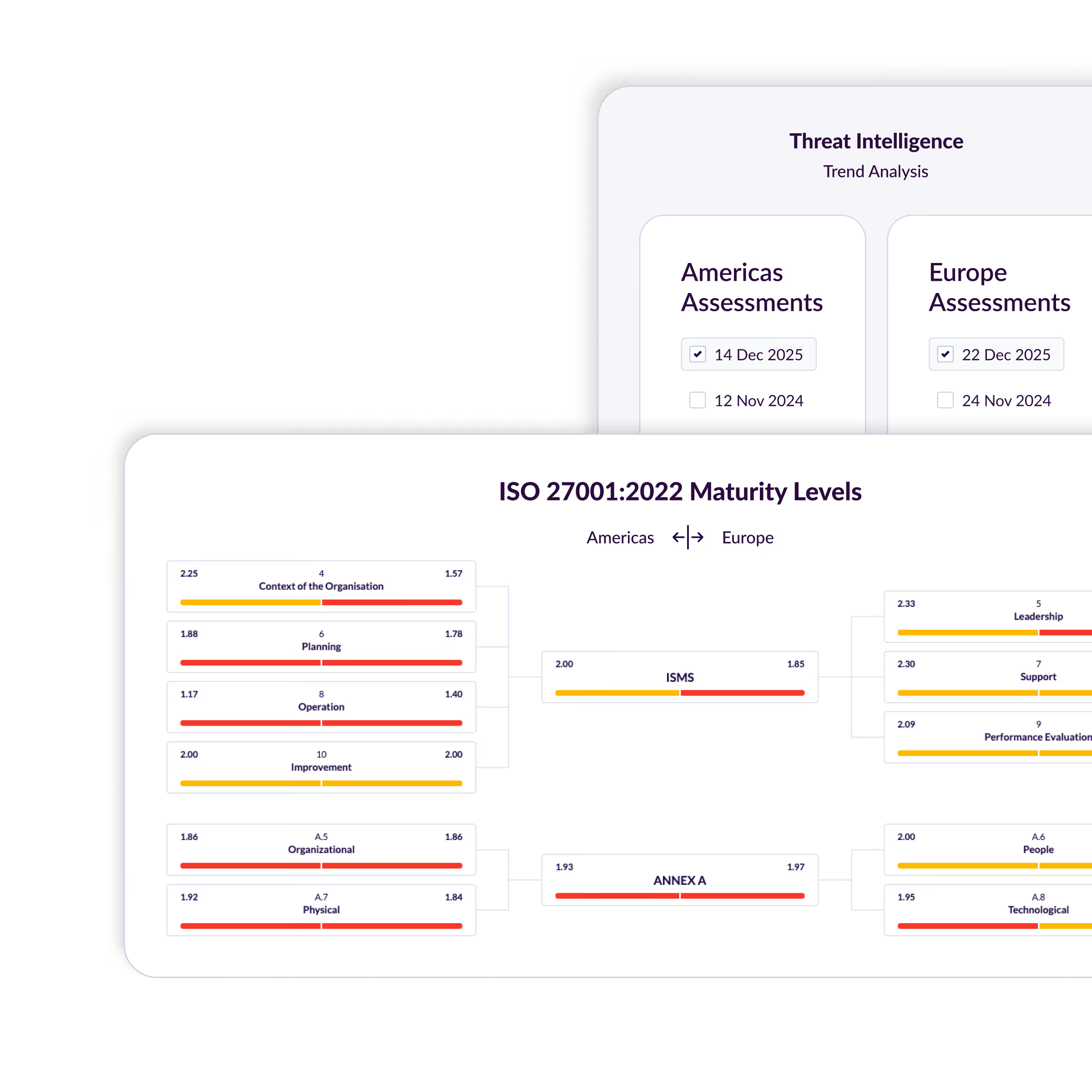
ISO 27001 creates more value when leadership can clearly see where issues exist, what they mean, and how improvement should be prioritised. In Spartacus, analysis, maturity heatmaps, findings, recommendations, reporting, and improvement planning remain connected to the underlying assessment, helping turn structured ISO activity into clearer decision-ready insight.
Approved outputs can be shared through controlled client access, while portfolio and trend views help show how results are changing across business units, regions, and repeat assessment cycles. This gives executives, sponsors, and stakeholders a more connected view of priorities, progress, and longer-term improvement effort.

Built for Ongoing Programmes
ISO 27001 creates more value when it is used as part of an ongoing programme rather than a one-off review. Spartacus helps preserve continuity across repeat assessment cycles, making the delivery model easier to sustain and results easier to interpret over time.
That continuity helps prevent loss of insight across delivery teams as programmes mature, while supporting a more repeatable and productised way to deliver ISO 27001. It also makes the process easier for clients to understand from the outset and easier to sustain over the longer term.
For consultancies, this supports stronger multi-year client relationships and a clearer route into follow-on improvement work. For internal teams, it provides a more durable model for managing security governance and continual improvement over time.
Connect ISO 27001 to Risk, Controls and TPRM
ISO 27001 provides a strong reference point for understanding cybersecurity capability and identifying priority areas for improvement. In Spartacus, that view can sit alongside adjacent products such as Quantitative Risk, Controls, and Third-Party Risk Management, helping organisations connect maturity insight to financial exposure, control decisions, and supplier assurance. This creates a natural path into adjacent assurance products as needs mature, without forcing a fixed sequence or bundled approach.
More Than a Standalone ISO Assessment
Spartacus helps organisations use ISO 27001 as part of a broader and more connected cybersecurity delivery model. Assessment, evidence, analysis, reporting, and improvement planning remain connected, making ISO easier to deliver consistently and more useful as part of an ongoing programme rather than a one-off review.
This gives consultancies a more repeatable and productised way to deliver ISO 27001, while giving internal teams a clearer and more durable basis for managing security governance over time. Completing an ISO 27001 assessment also creates a clearer basis for follow-on improvement work, with findings & recommendations flowing into structured improvement projects rather than being left in static reports.
More Spartacus Frameworks
The leading cybersecurity assessment platform for consultancies and enterprises. Connect with a product expert today.
NIST CSF 2.0
Assess cybersecurity posture against a widely used maturity framework, with clearer insight into current state, target state, and priorities.
ISO 27001:2022
Support a more structured view of ISMS maturity across clauses and Annex A controls, with stronger evidence, reporting, and visibility.
CIS Top 18
Evaluate practical cybersecurity safeguards in a more consistent and actionable way, with clearer visibility of gaps and priorities.
CMMC 2.0
Take a more structured approach to CMMC readiness, with clearer evidence, defensible reporting, and stronger visibility of gaps.