Third-Party Risk Management
Governed Confidence in Supplier Risk
Third-Party Risk Management helps organisations and consultancies move beyond static supplier questionnaires to a more structured, evidence-backed, review-driven model for third-party risk governance. It supports clearer supplier decisions, stronger oversight, and better visibility across the wider supplier portfolio.
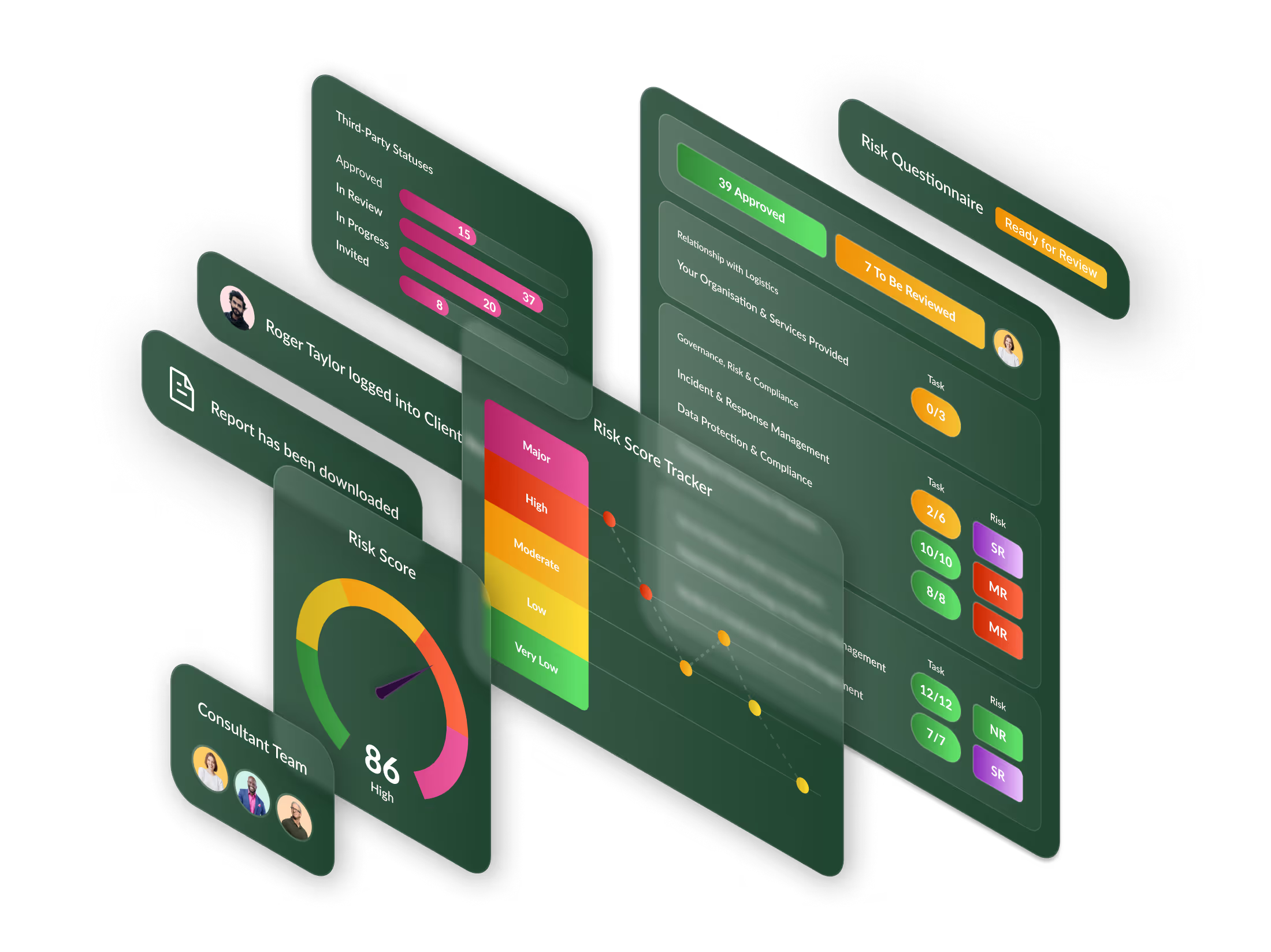
The Decision Third-Party Risk Management Supports
Is this supplier risk material enough to justify action, escalation, or closer review?
Third-Party Risk Management Thelps organisations decide which suppliers need more scrutiny, where risk is building, and what level of assurance is proportionate to the exposure in view.
It provides a clearer basis for supplier decisions, helping teams judge what should be reviewed, challenged, escalated, or prioritised across the supplier base.
Why Traditional Third-Party Risk Management Breaks Down
As reliance on external suppliers grows, recent high-profile cybersecurity breaches have shown that third parties can represent a direct and material source of risk. In that context, completed questionnaires and self-attestations no longer provide the level of assurance and clarity expected by boards, clients, or regulators.
The problem is not only weak assurance, but operational drag. Spreadsheet-led reviews, fragmented follow-up, and time-consuming coordination make it harder to maintain consistency, visibility, and confidence across the supplier base. Spartacus Insights is designed to replace that combination of weak assurance and operational friction with a more governed review model.
Supplier-Specific Question Sets
Third-Part Risk Management supports different supplier groups without forcing every third party through the same assessment shape. Review questions can reflect supplier criticality, service type and assurance requirement, helping teams apply a more proportionate level of review across the supplier base.
Each assessment still operates within a clearly defined and governed scope. Suppliers are reviewed against consistent expectations within that assessment context, reducing the inconsistency that comes from disconnected questionnaires, one-off templates and supplier-specific interpretation.


Supplier-Level Visibility
Third-Part Risk Management gives organisations a clearer view of each supplier’s position across the assessment, from individual questions and categories through to overall supplier risk posture. Responses, evidence, reviewer feedback, and risk outcomes remain connected within the same governed context.
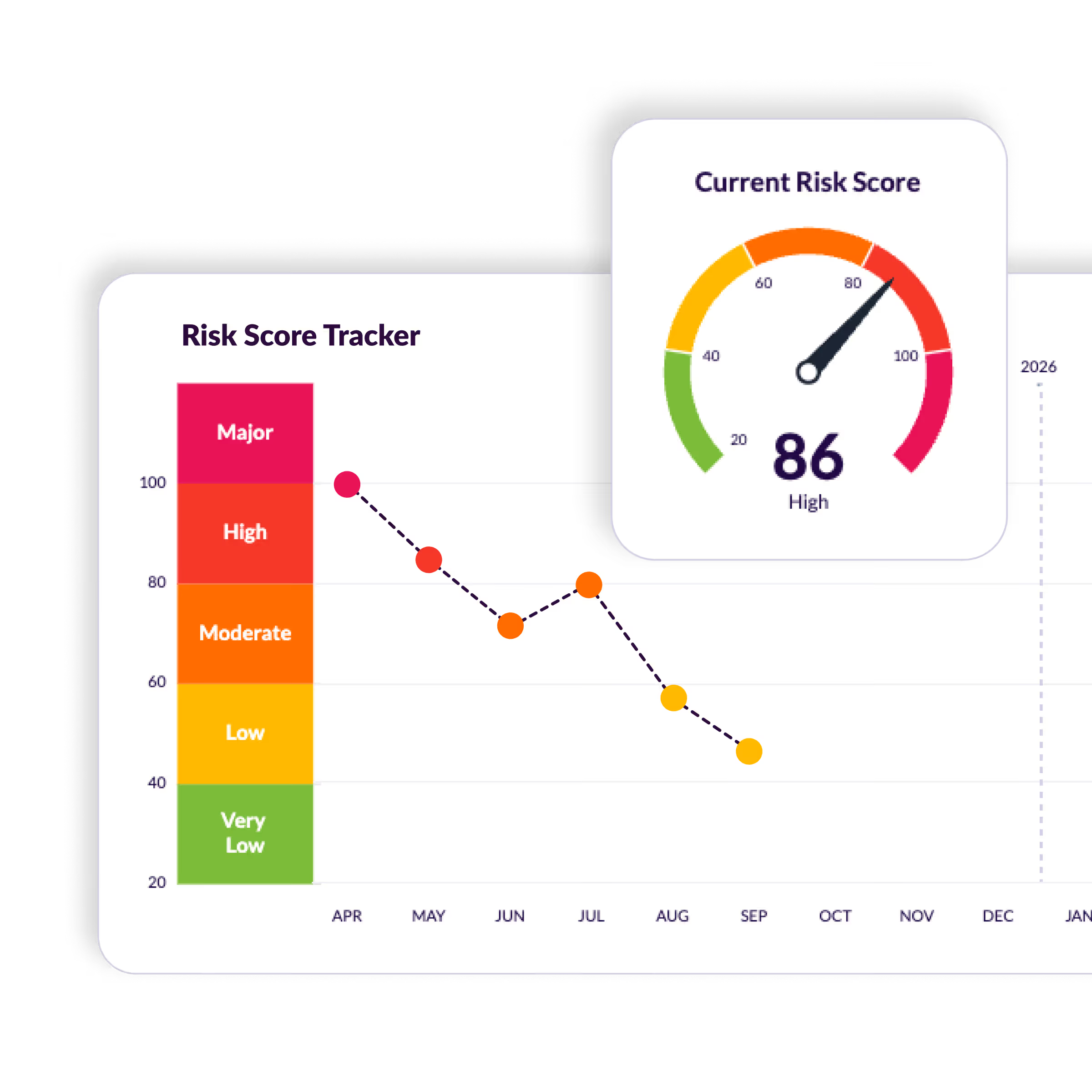
Supplier-level heatmap dashboards help highlight strengths, weaknesses, and areas of elevated concern, making it easier to understand what has been validated, where risk is building, and which areas still require closer attention.
Portfolio Oversight and Trends
Third-Part Risk Management extends visibility beyond individual suppliers, helping organisations understand completion status, review readiness, and current risk position across the wider supplier portfolio. This makes it easier to see which suppliers are progressing, which remain incomplete, and where assurance attention is needed most.
Teams can track status and risk across the whole portfolio or drill down to the suppliers that matter most, supporting more efficient operations, clearer prioritisation, and stronger control over third-party assurance activity.

Controlled Review and Risk Governance
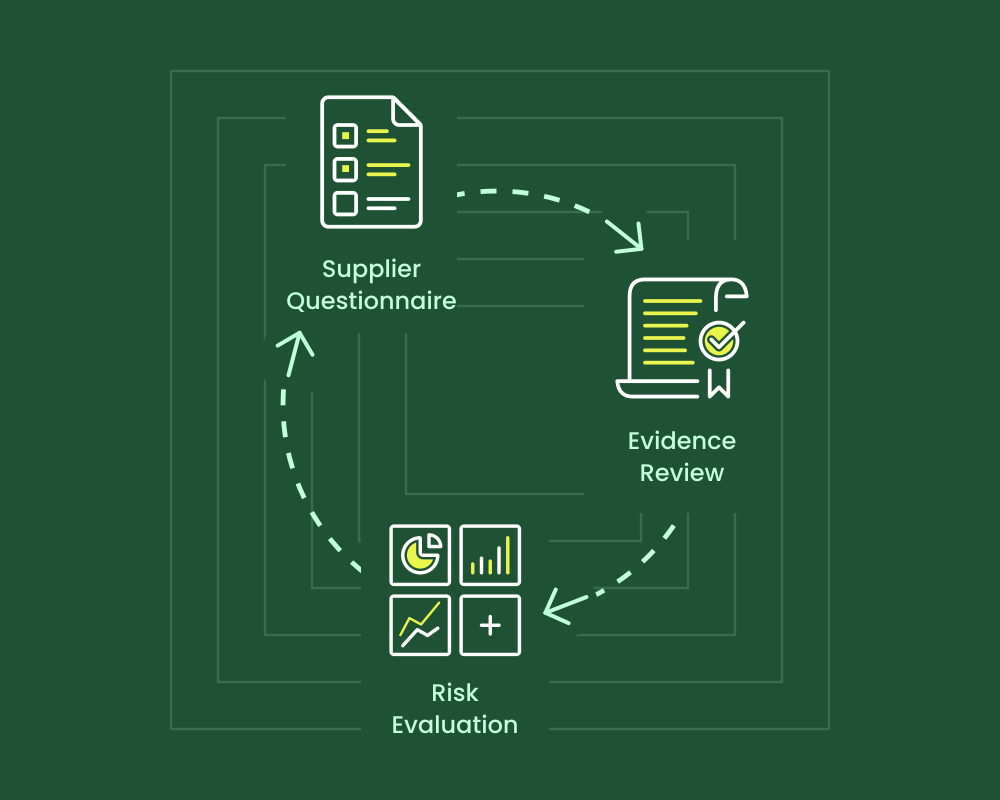
Third-Part Risk Management supports a controlled review process in which supplier responses are considered alongside supporting evidence rather than accepted at face value. Inline question-level feedback allows reviewers to challenge responses, request clarification, and guide resubmission in context, creating a clearer basis for judging what has been demonstrated, what remains uncertain, and where risk should remain elevated.
Because risk evaluation stays grounded in reviewer input and governed assessment context, organisations can apply risk more consistently and maintain a more defensible view of supplier assurance.
Focused on Assurance, Not Remediation
Third-Part Risk Management governs how third-party risk information is gathered, reviewed, challenged, and understood. It supports structured supplier assessment, evidence-backed review, controlled risk evaluation, and clearer visibility across both individual suppliers and the wider portfolio.
It does not replace professional judgement, supplier relationship management, or organisational ownership of third-party risk outcomes. Instead, it provides the governed foundation within which those activities can remain coherent, repeatable, and defensible.

Less Operational Drag
Third-Part Risk Management reduces the operational drag created by spreadsheet-led reviews, fragmented follow-up, and duplicated tracking across suppliers. By keeping responses, evidence, reviewer feedback, and risk decisions within one governed process, teams can manage third-party assurance with less coordination overhead and less manual reconstruction.
This supports more efficient operations, more repeatable review activity, and a more scalable delivery model across larger supplier populations.
Built for Assurance and Professional Delivery
Third-Part Risk Management supports more productised and repeatable third-party risk engagements by giving consultancies and assurance teams a governed structure for supplier assessment, review, and reporting. This helps reduce delivery variance, improve consistency across reviewers, and make effort more predictable across engagements.
It also supports clearer client conversations, more defensible assurance outputs, and stronger pull-through into wider supplier governance, onboarding, and ongoing monitoring work
Explore Product Decision Lenses
Explore productised capabilities that support clearer decisions across supplier assurance, quantitative risk, threat-informed protection, control investment and Custom Frameworks.