How Spartacus Works
A Connected Lifecycle for Cybersecurity Programmes
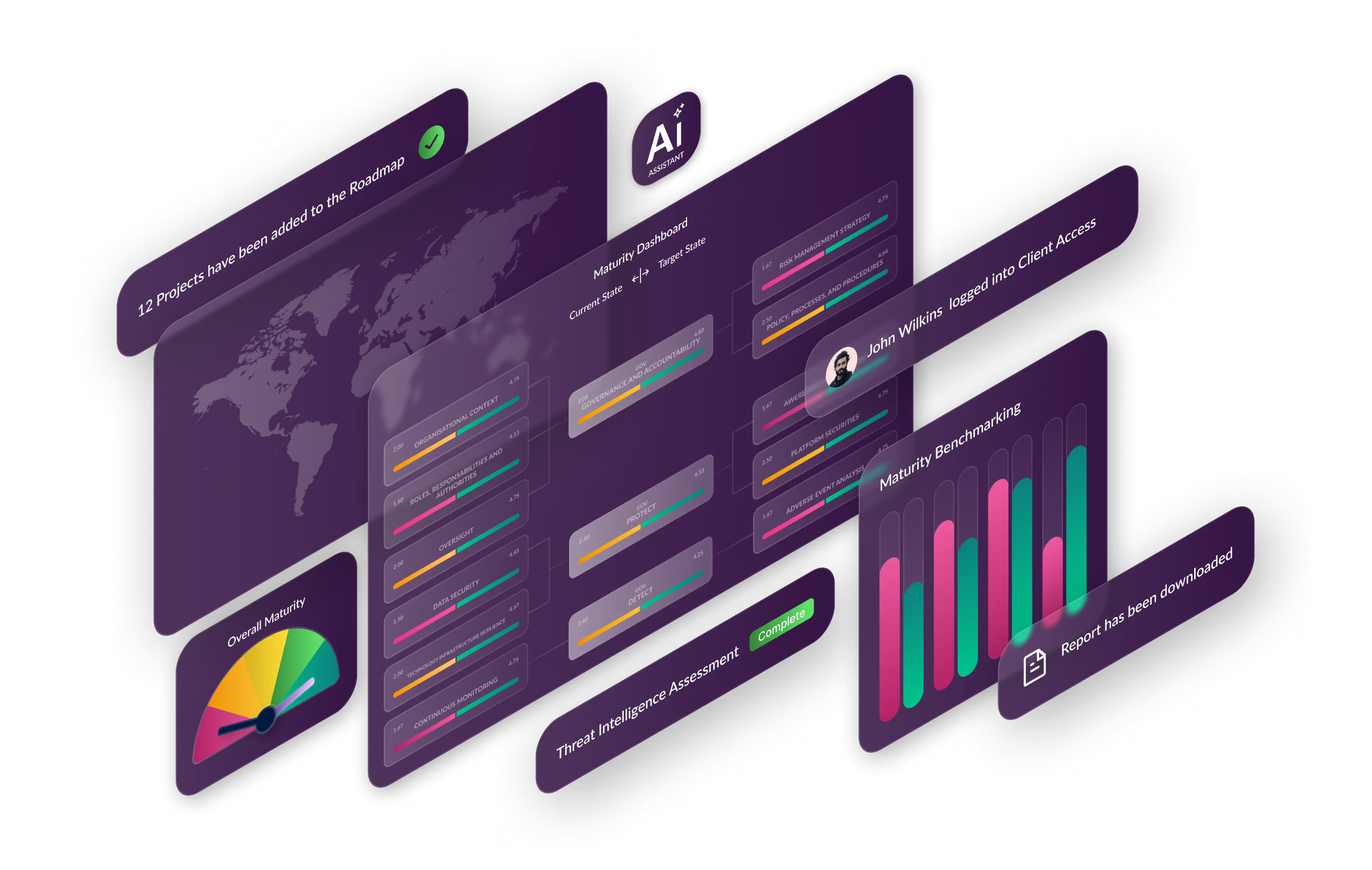
Spartacus Insights helps cybersecurity programmes hold together over time. It connects assessment, decision-making and long-term visibility through a single governed lifecycle, helping organisations scale without losing control, context or defensibility.
Cybersecurity Is Fragmented
Cybersecurity work rarely sits in one place. Assessment activity, evidence, reporting, recommendations and follow-up actions are often spread across spreadsheets, documents, email threads and delivery teams.
As a result, context is lost, outputs become harder to compare, and teams spend more time reconstructing decisions than building on them.
One Governed Lifecycle
Spartacus Insights connects assessment, evidence, analysis, reporting, action planning, trend visibility and client access in one structured lifecycle. Each stage builds on the last, reducing rework, reinterpretation and manual reconstruction.
Outcomes accumulate over time rather than existing in isolation, helping teams preserve context, improve comparability and generate clearer insight as programmes evolve.
Assessments
Structured Assessment
Assessments are where confidence is established. In Spartacus Insights, they are structured to make outcomes more consistent, repeatable and bounded.
Each assessment is conducted within a clearly defined scope, framework and measurement method, with guidance and interpretation applied consistently. Outcomes are easier to keep consistent across teams and cycles, while each assessment stays self-contained, audit-defensible and comparable over time.
This reduces reliance on individual interpretation by giving teams a stronger foundation that can be revisited, compared and built upon. Assessment becomes the first step in a programme, not a disposable point-in-time exercise.
Evidence
Evidence Stays in Context
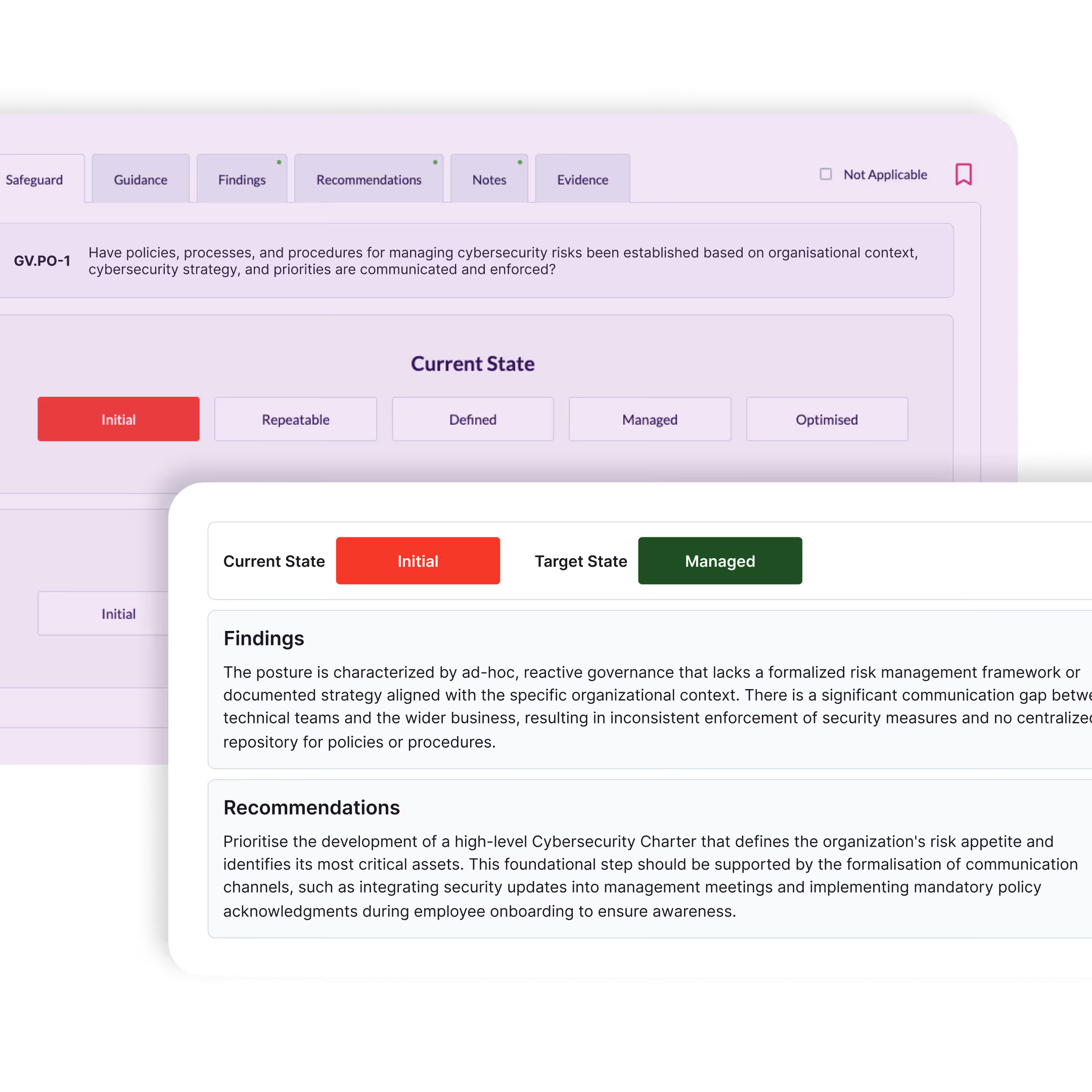
Evidence is most valuable when it stays connected to the decisions it supports. In Spartacus Insights, documents, notes, findings, recommendations, and supporting material remain linked to the relevant assessment context rather than being scattered across folders, inboxes, and separate review activity.
This makes decisions easier to interpret, revisit, and defend over time, while supporting traceability, review, and stronger confidence as programmes evolve.

Analysis
Analysis That Remains Aligned
In Spartacus Insights, charts, dashboards, heatmaps showing strengths and weaknesses, and benchmarking views, where enabled, are generated from the underlying assessment context rather than being rebuilt separately in slides, spreadsheets, or disconnected reports.
This makes results easier to interpret, compare, and trust over time, while keeping analysis aligned to the work it represents.

Reports
Reporting That Reflects Reality
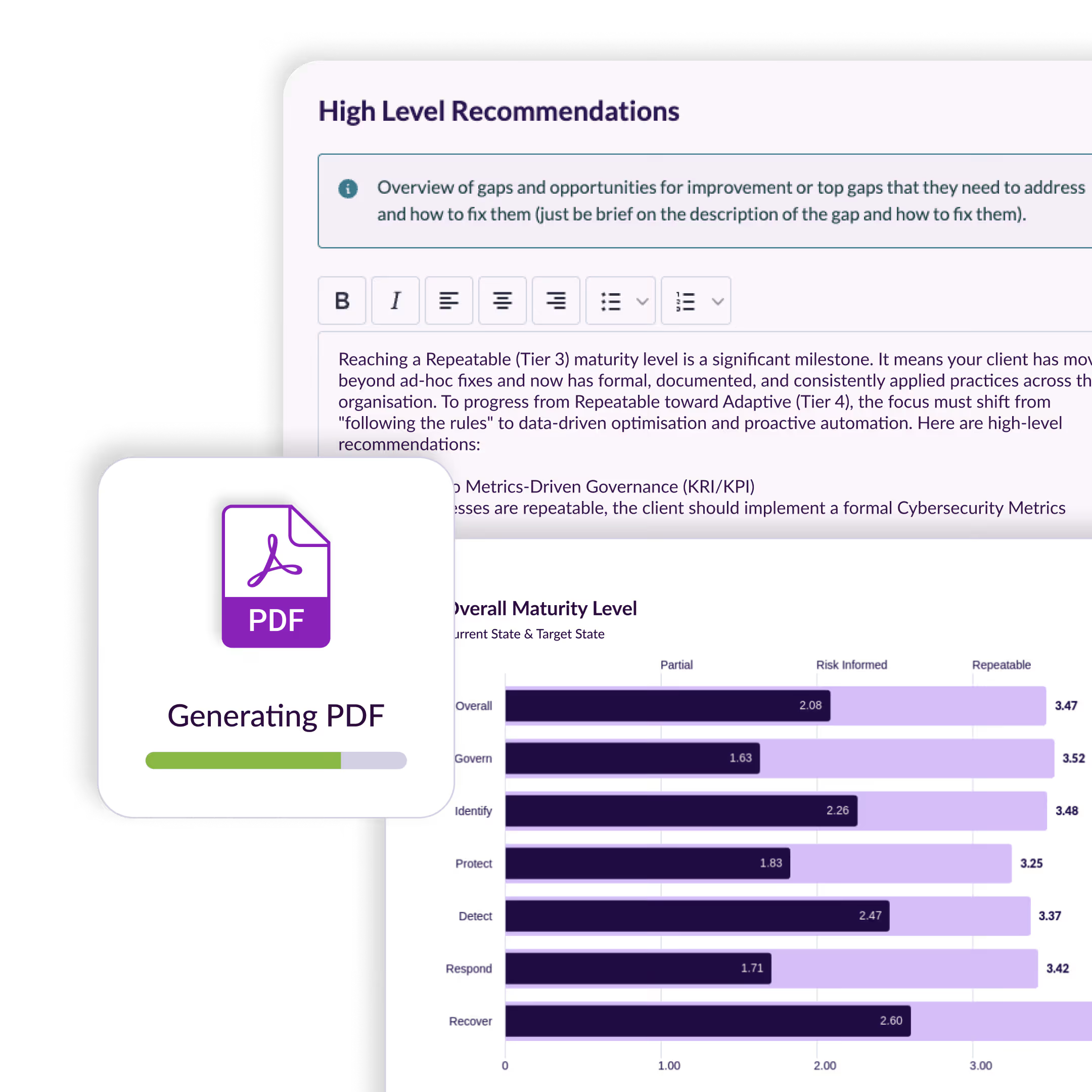
In Spartacus Insights, reporting is built from the underlying assessment context, analysis, findings and recommendations rather than rebuilt separately once the work is complete.
Seeded content, consultant instructions and platform-generated visuals support more consistent, professional reporting across teams. This reduces formatting effort and helps consultants focus on interpretation and advice rather than report assembly.
Because reports remain in the platform, reporting context is preserved for future reference, giving stakeholders a clearer view of posture, priorities and the decisions behind them over time.
Projects
From Insight to Improvement
In Spartacus Insights, assessment outcomes do not stop at dashboards or reports. Findings and recommendations can be carried forward into action planning, helping teams turn insight into clearer priorities and more structured cybersecurity roadmaps.
This helps teams move from understanding to action, linking assessment outcomes to risk prioritisation, maturity improvement and indicative cost and timing considerations. Improvement activity remains grounded in the work that informed it.

Trend Analysis
Track Progress Over Time
Spartacus Insights supports repeat assessments and a clearer view of how cybersecurity posture changes over time. By comparing assessments across time, regions and organisational scopes where comparison is valid, teams can track maturity improvements, identify recurring weaknesses and see where priorities continue to require attention.
This creates stronger long-term visibility and portfolio oversight, helping teams understand improvement, drift, and change across cybersecurity programmes rather than relying on isolated reporting snapshots.

Client Access
Controlled Transparency for Clients
Spartacus Insights supports controlled client access, allowing approved analysis, reports, projects and trend views to be shared without exposing internal working material. Internal notes, draft content and review activity remain protected.
This gives clients clearer visibility of outcomes and progress through approved interactive views, where enabled, rather than static reports alone. It creates a more professional, insightful and engaging client experience while helping teams maintain control over what is shared and how cybersecurity work is presented over time.

One Platform, Multiple Starting Points
Spartacus Insights uses the same connected operating model across different cybersecurity priorities. This allows organisations and consultancies to start where they need to and extend into complementary products over time for a more complete view.
Products
Spartacus Insights includes productised capabilities that support clearer decisions across quantitative risk, control investment, supplier assurance, custom frameworks and threat-informed protection.
Frameworks
Spartacus Insights helps organisations and consultancies apply recognised cybersecurity frameworks and regulated readiness requirements in a more structured, consistent and measurable way.
Why This Approach Works
Spartacus Insights works this way because cybersecurity is not a one-off exercise. It is an ongoing process of assessment, evidence, analysis, reporting, improvement planning and review. When those stages remain connected, teams can preserve context more effectively, work more consistently and build a clearer, more defensible view of posture over time.
This helps reduce rework, improve comparability and support more informed decisions across frameworks, products and programmes. It also gives consultancies a more consistent and scalable way to deliver work without relying on manual reconstruction or individual interpretation.