NCSC CAF 4.0
A Clearer View of Essential Service Resilience
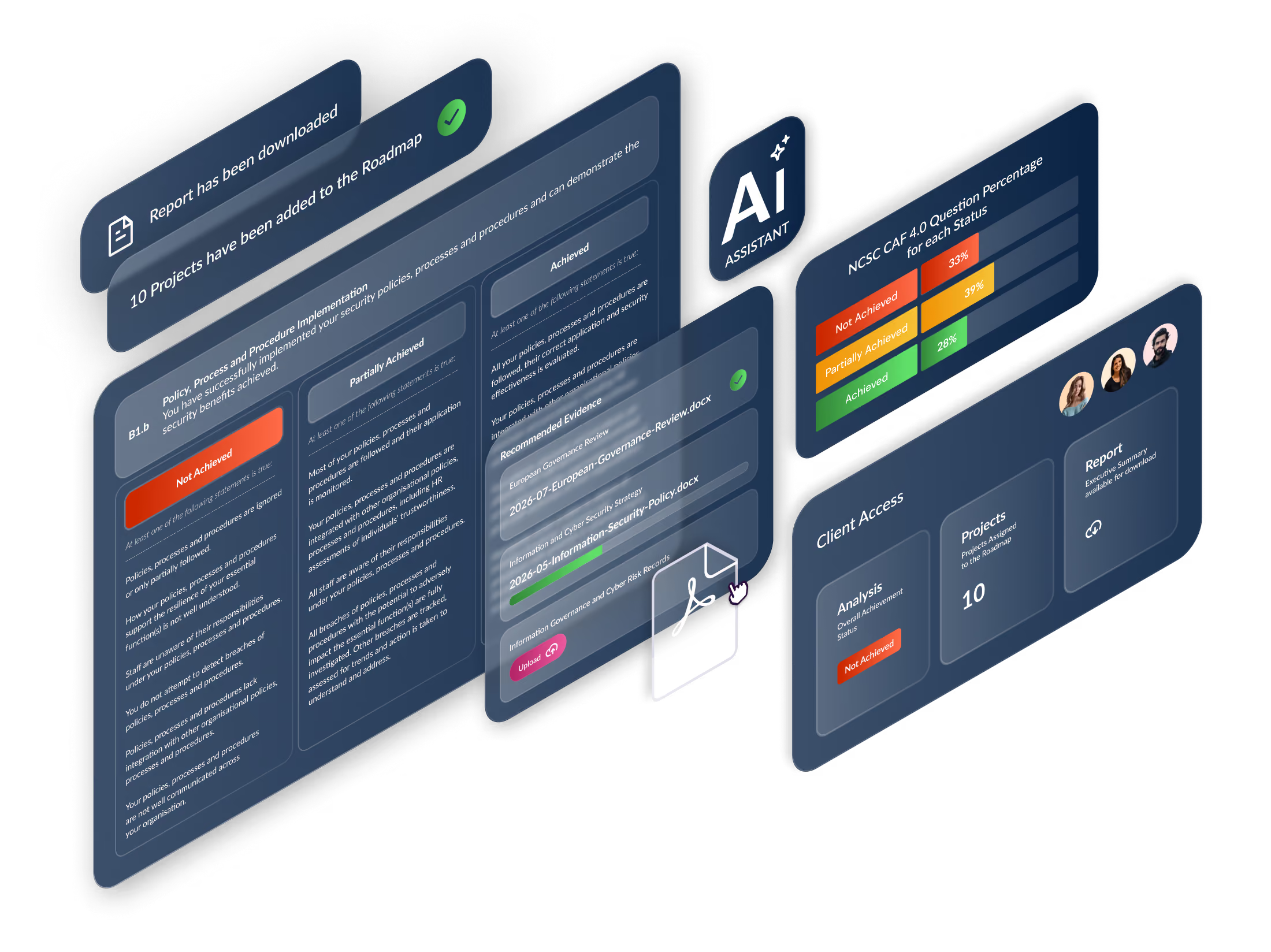
Understand how well your essential services are protected and where improvement matters most. Spartacus Insights connects NCSC CAF assessments, evidence, analysis and reporting, helping teams explain strengths and weaknesses, agree priorities and justify investment in improvements across governance, security and operations.
Why Organisations Use NCSC CAF 4.0
NCSC CAF helps organisations assess whether their cybersecurity arrangements deliver the outcomes needed to support secure and resilient essential services. Its four objectives bring together managing security risk, protecting against cyber attack, detecting security events and minimising the impact of incidents. This gives service owners, security teams and leaders a shared basis for examining operational evidence, understanding dependencies and agreeing what needs to improve as services and risks change.
Bring Evidence and Outcomes Together
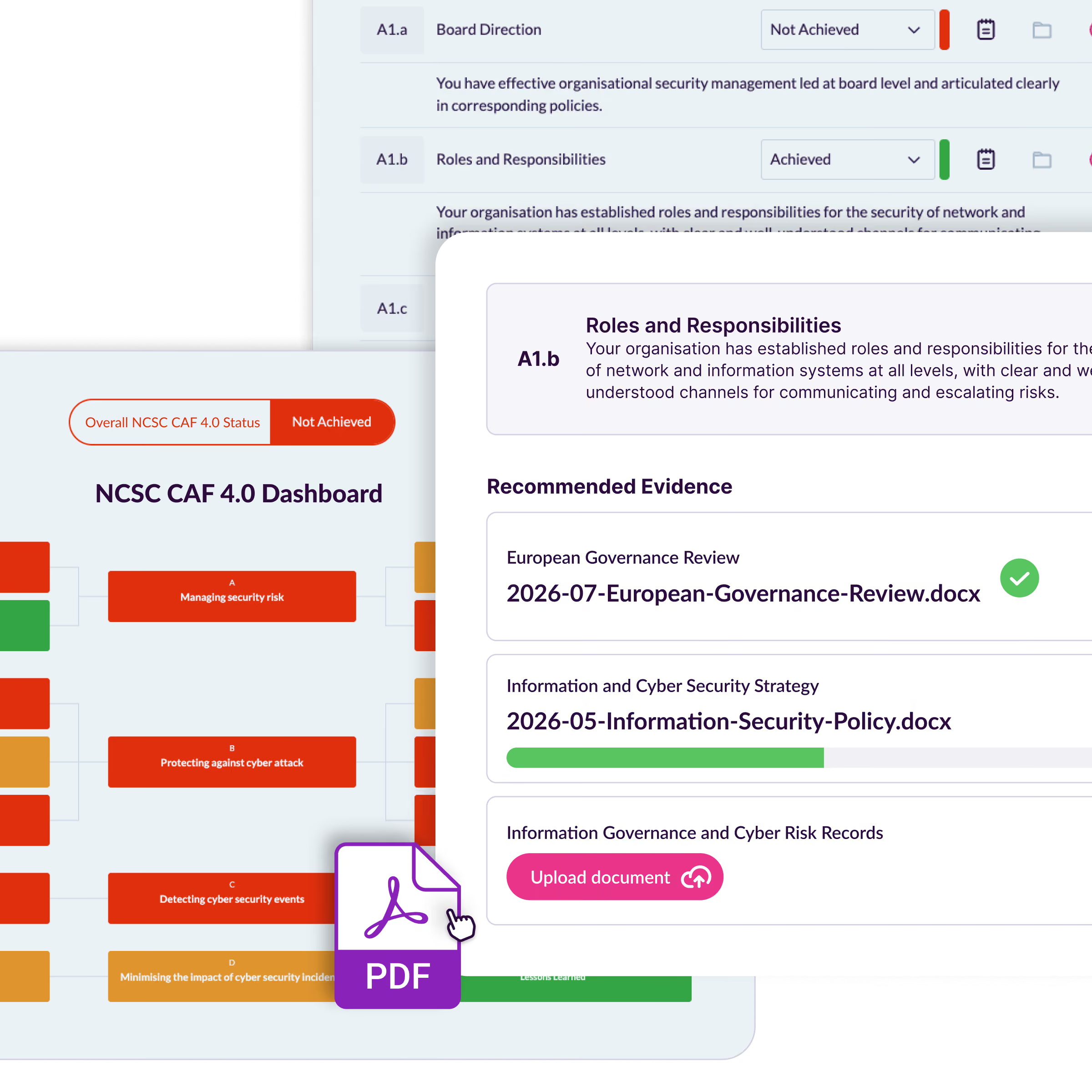
When CAF assessment work is spread across email, spreadsheets, documents and disconnected reports, evidence becomes harder to trace and outcome judgements harder to explain. Spartacus Insights keeps evidence, findings and recommendations connected to the outcomes being assessed, helping teams justify their conclusions, identify gaps and propose improvements.
Build an Assessment You Can Explain
A credible CAF assessment explains whether the intended outcomes are achieved and what supports each judgement. Enhanced assessor guidance helps teams interpret the outcomes and indicators of good practice, with interview prompts, practical examples and evidence suggestions. This supports consistent assessment while leaving assessors responsible for evaluating the evidence and reaching conclusions.
Documents provide part of that picture. Notes capture interviews, walkthroughs and observations, preserving the context and limitations behind findings. AI-assisted evidence review, currently in beta, reduces drafting effort by suggesting findings and recommendations for individual documents linked to an assessment question. Assessors review and refine those suggestions alongside the wider evidence.
Shared guidance helps less experienced colleagues contribute under senior oversight. Retained evidence and assessment reasoning make reviews and handovers easier, helping consultancies and internal teams maintain consistent standards as responsibilities change, with less dependence on individual knowledge.
Turn Outcome Gaps into Management Action
CAF findings become more useful when leaders understand what needs to change and why it matters to essential services. Spartacus Insights brings current outcome achievement, agreed targets and recommendations into a clear management view. Teams can distinguish weaknesses in operating practice from gaps in supporting evidence and identify where action or further investigation is needed.
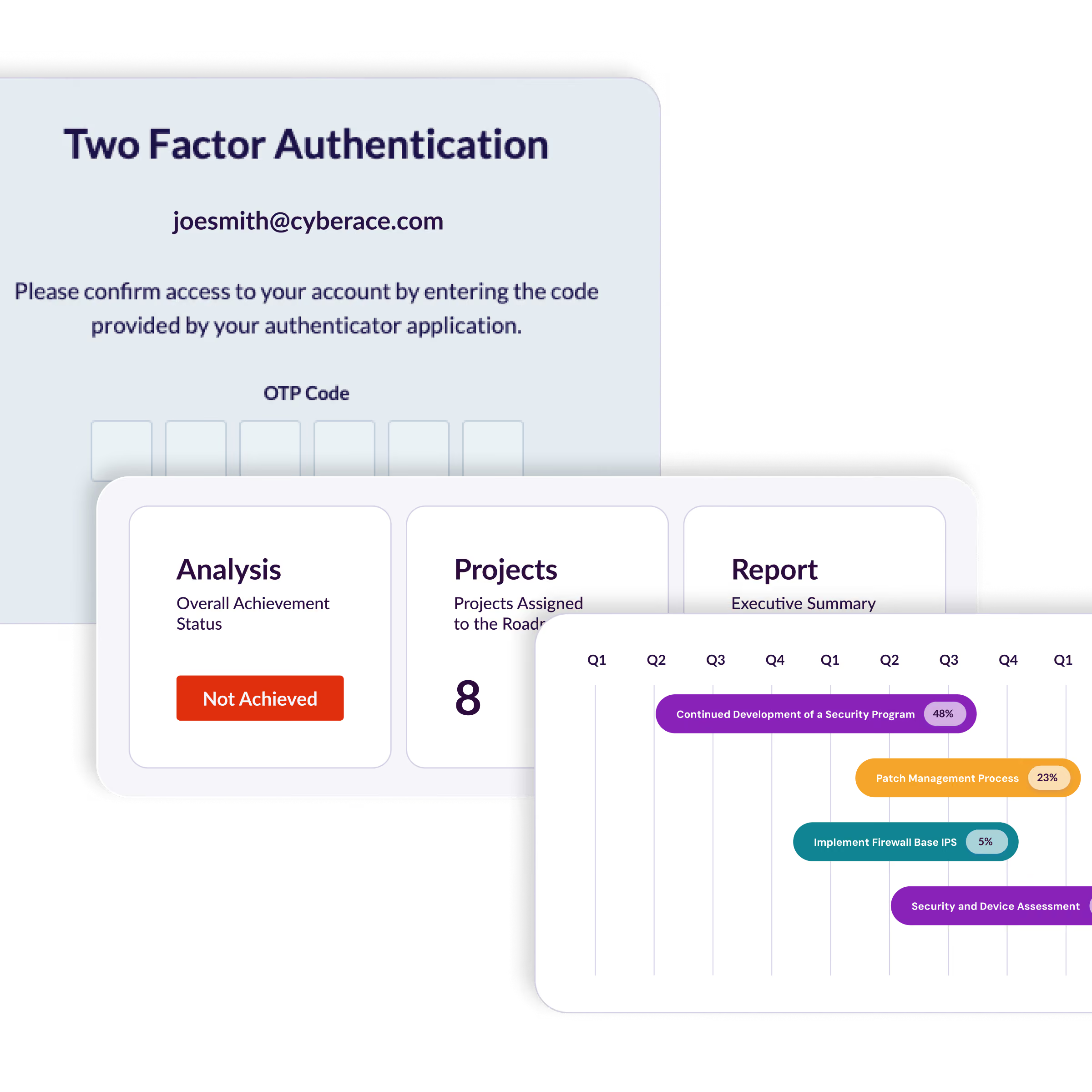
Improvement proposals connect those gaps with expected benefits, deliverables, dependencies, resources and estimated costs. Workstreams and timelines help teams organise a coordinated programme across governance, protection, detection and response. This gives executives a clearer basis for comparing proposals, agreeing priorities and deciding which improvements to fund.
Reports explain the findings, proposed improvements and rationale for investment. Through controlled Client Access, stakeholders can revisit selected analysis, reports and improvement plans, challenge priorities and discuss the proposed programme with delivery teams, while internal evidence, notes and drafts remain private.
Track Progress Across Essential Services
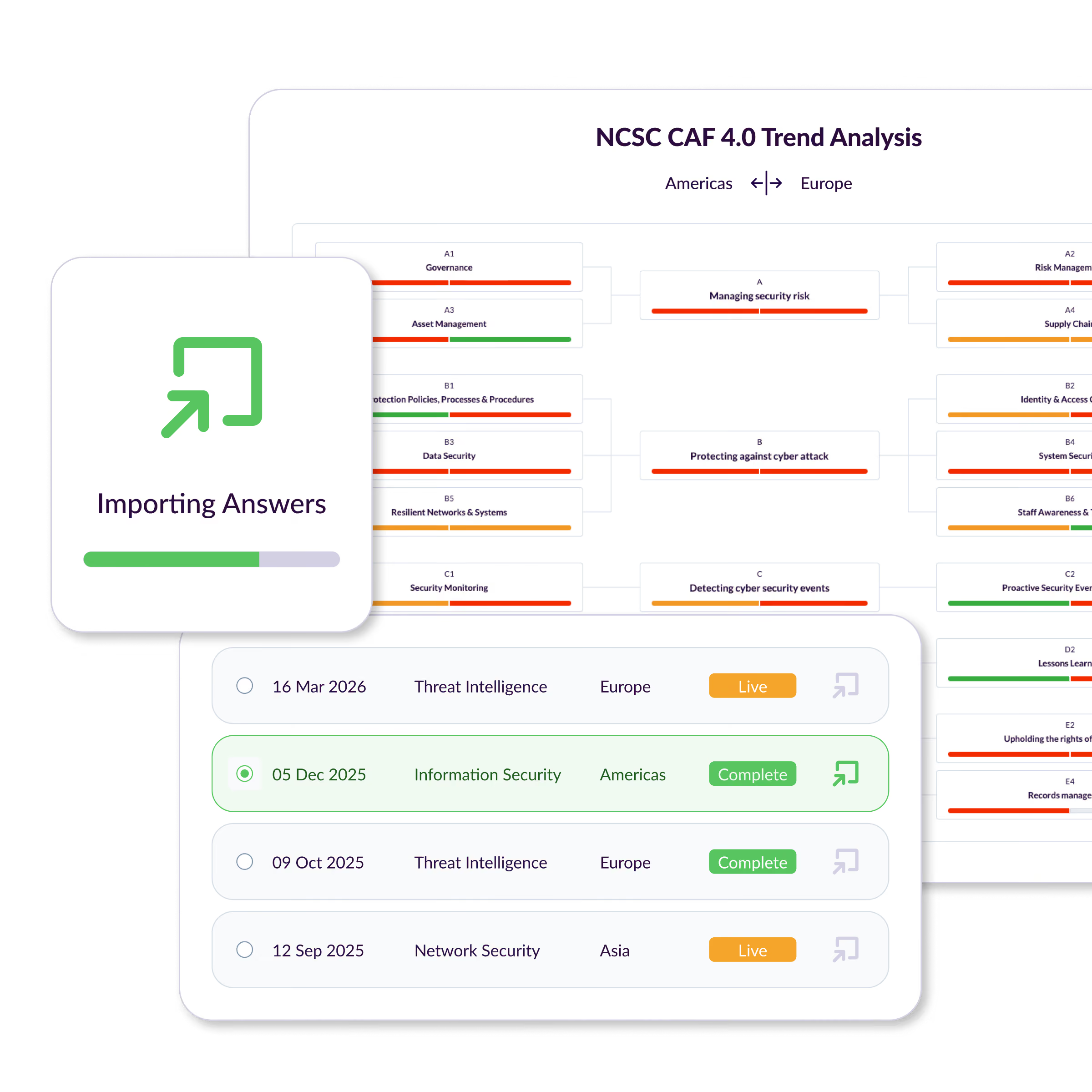
Periodic CAF reassessment helps teams see whether outcome achievement is improving, how close they are to agreed targets and where weaknesses remain. Trends compares selected assessments over time or across business areas and regions. This gives leaders a clearer basis for reviewing progress and adjusting priorities as services and risks change.
Meaningful comparisons account for differences in service scope, evidence periods, CAF edition and any optional NHS DSPT assessment scope. This helps consultancies deliver repeatable reviews and internal teams distinguish organisation-wide concerns from weaknesses specific to individual services or business areas, directing attention and resources where they are most needed.
Coordinate Assurance for NHS DSPT
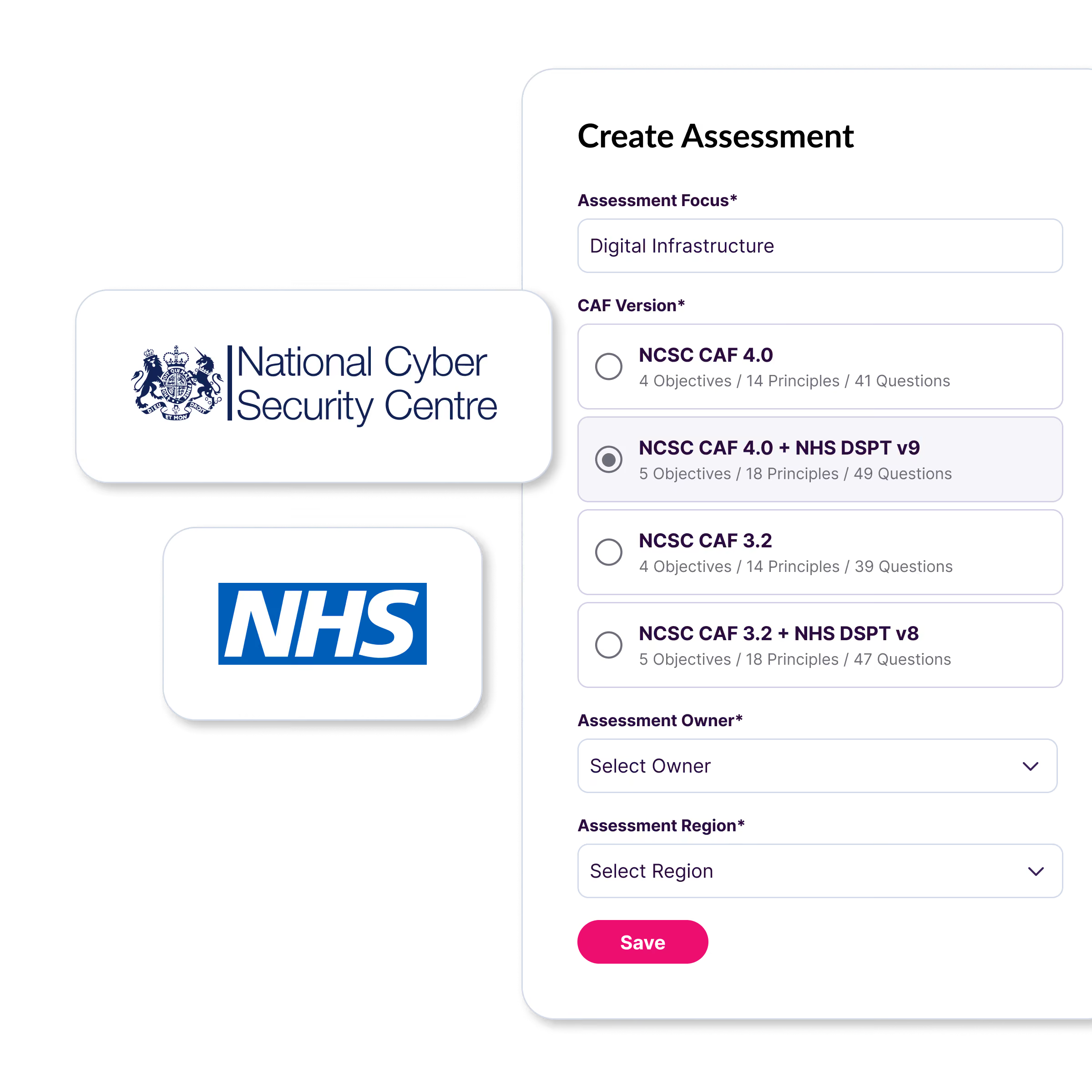
For relevant healthcare organisations and suppliers, Spartacus Insights brings cybersecurity and information-governance assurance into one assessment. The optional NHS DSPT v9 variant applies NHS-specific wording and criteria to CAF 4.0 Objectives A–D and adds Section E beyond native CAF scope. This helps teams coordinate evidence, identify gaps and agree improvement priorities.
CAF can also be assessed on its own. Organisations and qualifying suppliers remain responsible for meeting the NHS DSPT requirements applicable to their organisation category and completing formal submission separately.
Spartacus Insights supports both CAF 4.0 paired with DSPT v9 and CAF 3.2 paired with DSPT v8.
Where NCSC CAF 4.0 Leads Next
CAF findings provide a starting point for complementary assessments. Quantitative Risk helps teams understand financial exposure; Controls & Investment supports more defensible control investment priorities; and Third-Party Risk Management strengthens supplier assurance. Threats & Protection adds a view of how assessed capabilities support defence against defined threat scenarios.
More Than a Standalone NCSC CAF 4.0 Assessment
Spartacus Insights helps consultancies build repeatable CAF advisory services and internal teams sustain assurance around essential services. Findings provide a basis for focused governance, protection, detection and recovery work, while periodic reassessment helps teams review progress and maintain ongoing leadership oversight.
Threats & Protection reveals capability weaknesses shared across scenarios, helping teams prioritise improvements that could strengthen protection against several threats. Missing scores remain separate from assessed weaknesses, distinguishing areas needing further assessment from those needing improvement. These insights support focused consultancy advice and help internal teams explain the rationale for investment.
Explore More Frameworks
Different frameworks create different views of cybersecurity posture, readiness and assurance. Explore the Spartacus Insights framework set and find the right starting point for your programme.