NIST AI RMF
A Clearer View of AI Risk and Accountability
Understand how well AI risks are managed and where governance needs to improve. Spartacus Insights connects NIST AI RMF assessments, evidence, analysis and reporting, helping teams clarify accountability, explain strengths and weaknesses, and prioritise improvements for the AI systems and use cases in scope.
Why Organisations Use NIST AI RMF
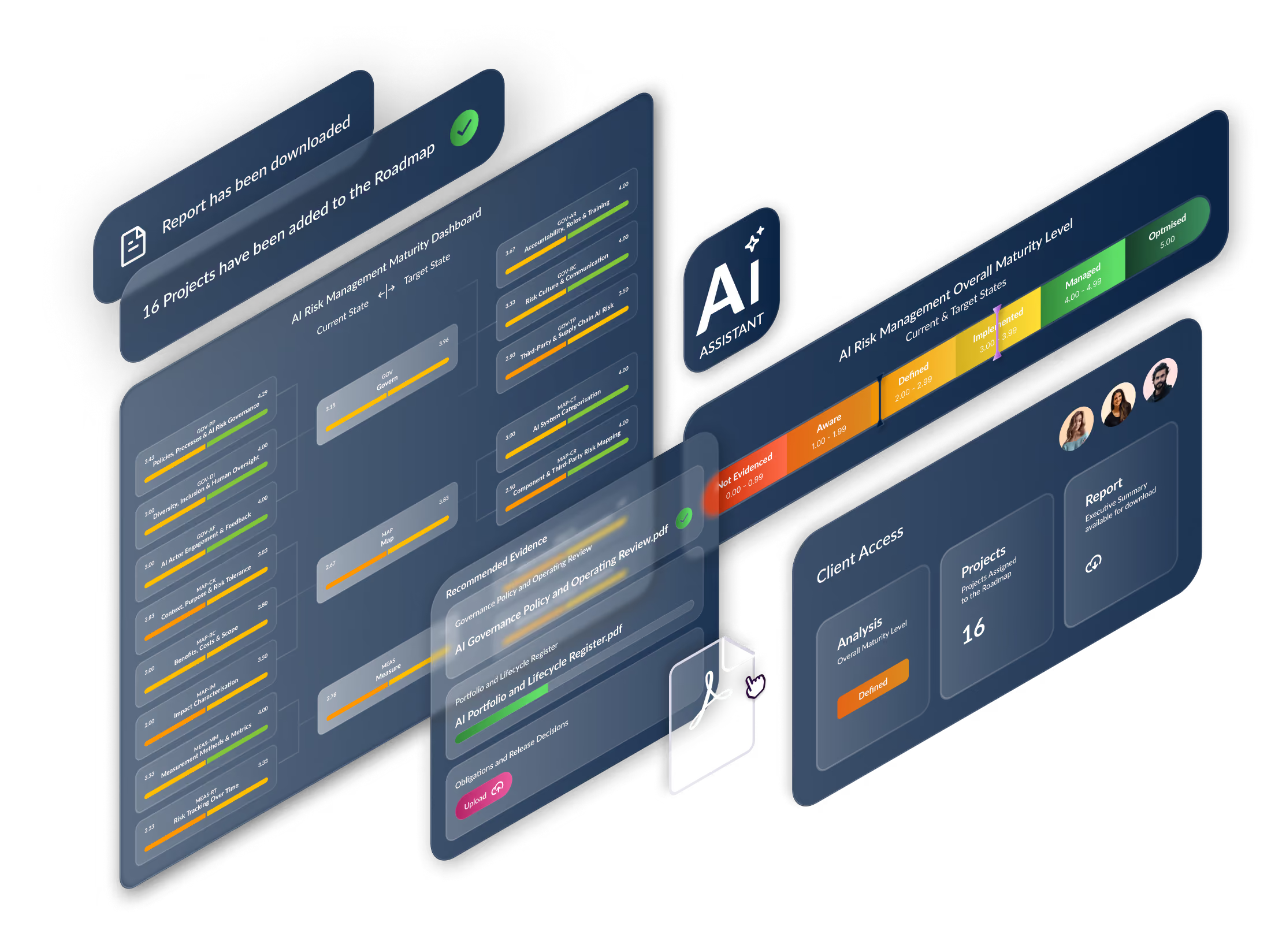
NIST AI RMF helps organisations understand and manage risks associated with AI. Its four functions, Govern, Map, Measure and Manage, connect accountable governance with an understanding of system context, risk evaluation and response. Spartacus Insights helps teams assess how these practices operate for their AI systems and use cases, giving leaders an evidence‑led basis for deciding where responsibilities, oversight or risk management need to improve.
Connect Policy with Operating Practice
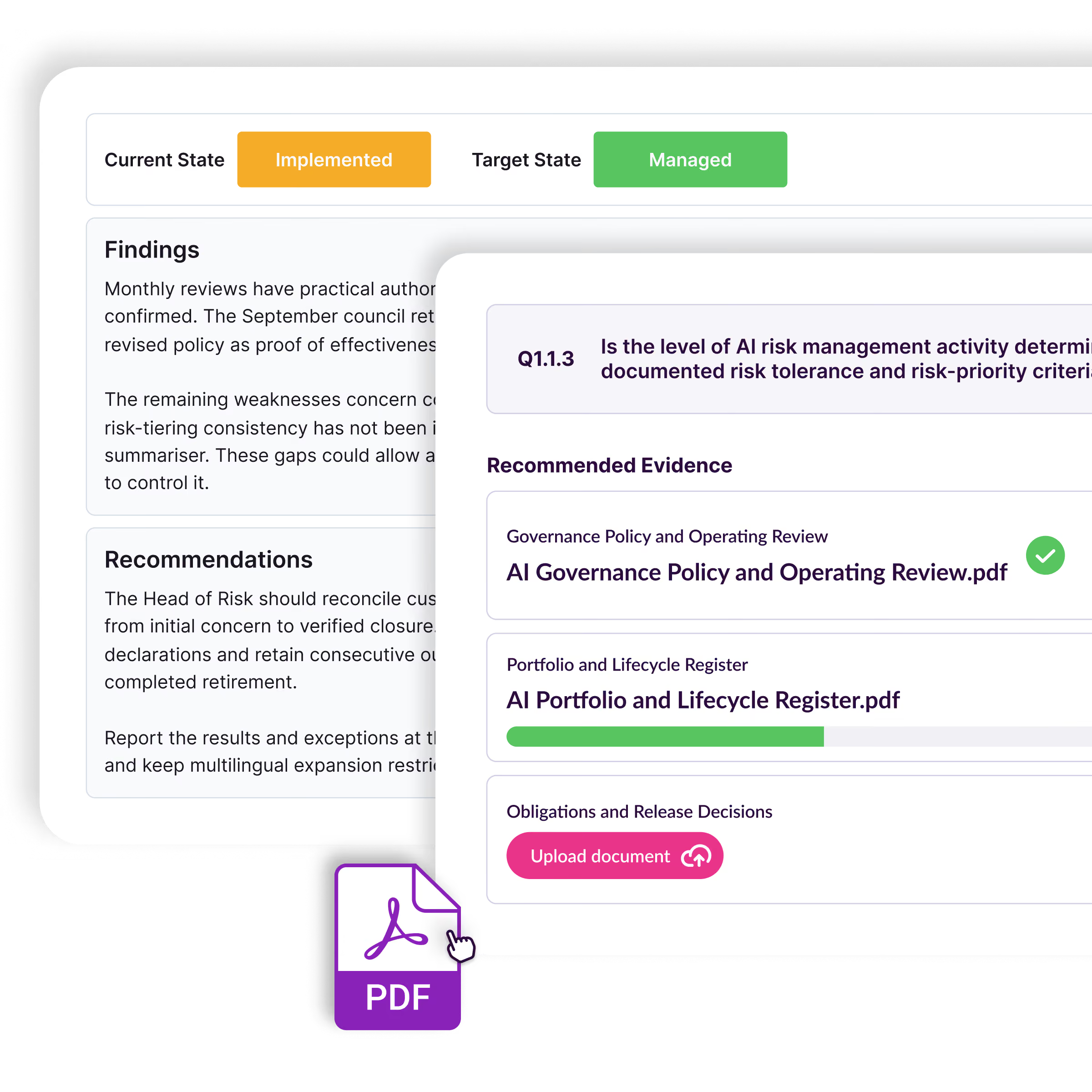
When AI governance records sit across email, spreadsheets and disconnected teams, it becomes harder to explain how policies are applied and decisions are made. Spartacus Insights connects evidence, findings and recommendations with assessment questions, helping teams distinguish policy commitments from operating practice and explain where governance needs to improve.
Build an Assessment You Can Explain
A credible AI risk assessment explains how governance operates for the systems and use cases in scope. Assessor guidance provides interview prompts, evidence suggestions, red flags and scoring guidance, helping teams examine accountability, challenge broad assurances and investigate gaps. Agreement on who provides and reviews evidence coordinates contributions across governance, risk, security and technology.
Linked documents retain findings and recommendations against each question. Notes capture interviews, walkthroughs and observations, preserving their source and limitations. Assessors bring the evidence together into findings and recommendations for each assessment category, retaining responsibility for the conclusions and final scores.
Shared guidance helps less experienced colleagues contribute under senior oversight. Retained evidence and assessment reasoning support consistent reviews and handovers, helping teams explain how they reached their conclusions and preserve knowledge as responsibilities change.
Choose the Right Assessment Scope
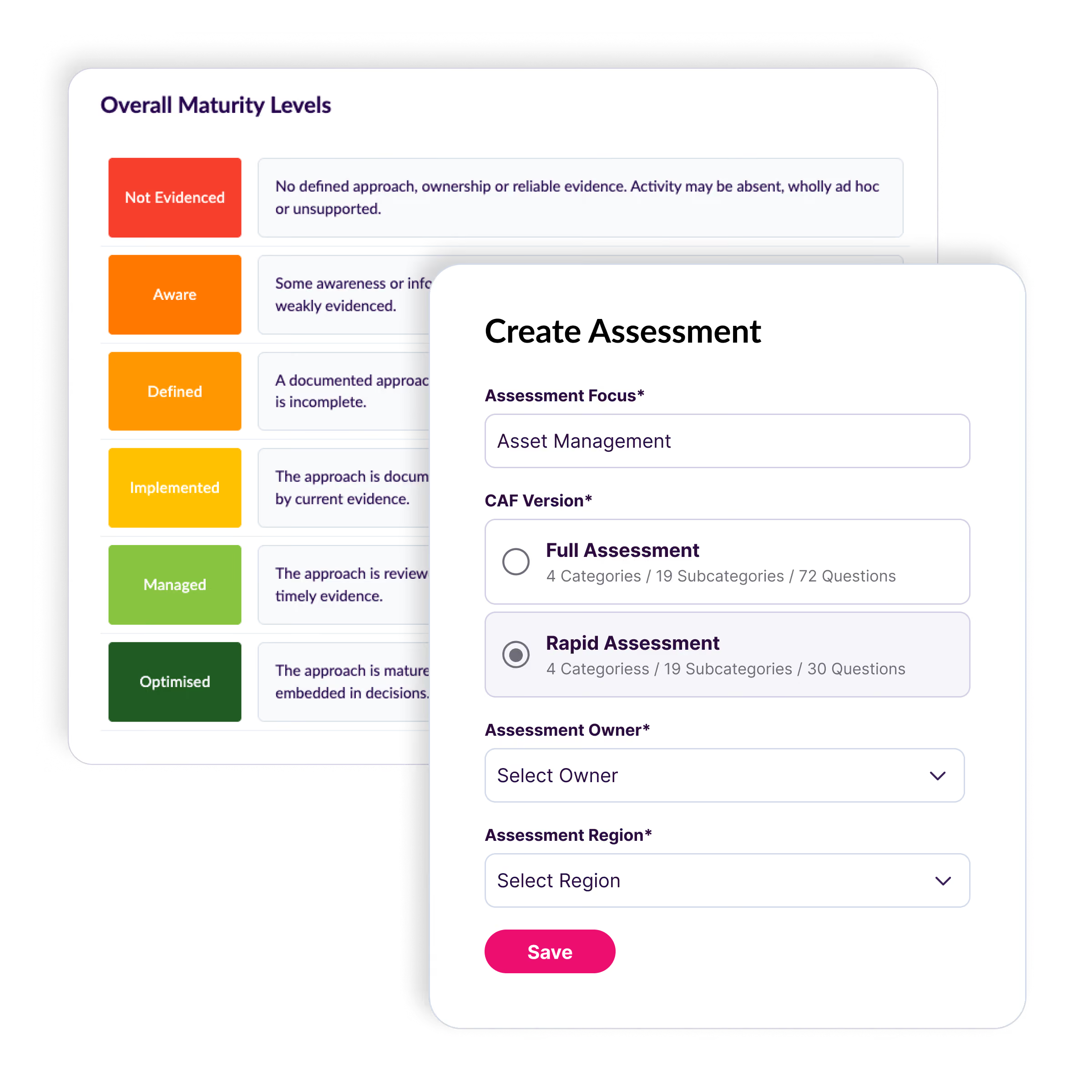
Choose a Full assessment for the complete question set or a Rapid assessment for a focused initial review. Rapid provides narrower coverage, with conclusions limited to the areas assessed.
Both use Spartacus Insights’ 0–5 maturity scale, from Not Evidenced to Optimised, to compare current AI governance and risk‑management practice with agreed targets. This helps teams understand their starting position and set priorities for improvement.
Turn Governance Gaps into Management Action
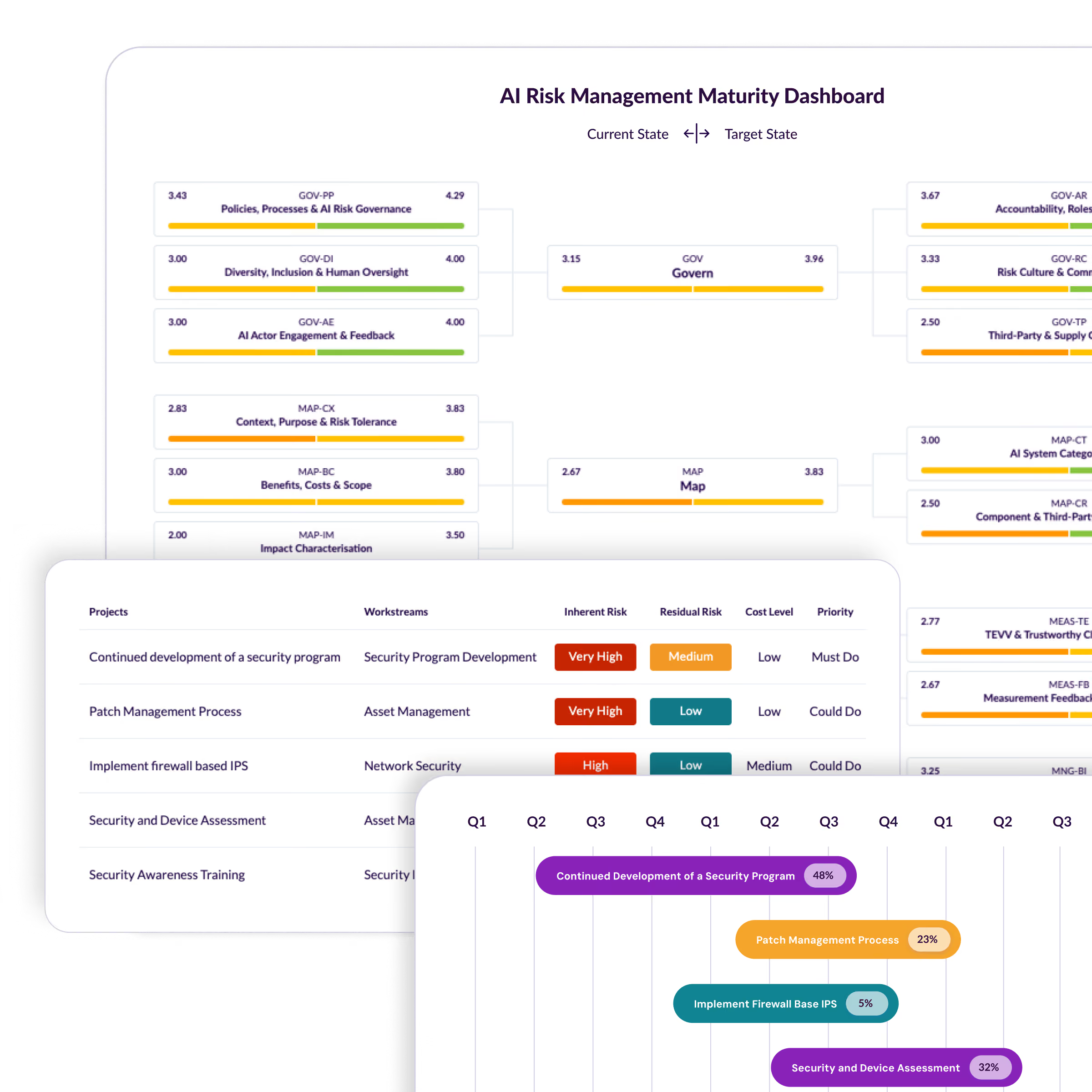
Heatmaps and charts show gaps between current and target maturity across Govern, Map, Measure and Manage. Teams can examine the underlying questions, scores and evidence to identify unclear ownership or weak risk‑management practices. This helps leaders distinguish assessed weaknesses from gaps in supporting evidence and decide what needs action or further investigation.
Improvement proposals connect those findings with expected benefits, deliverables, resources and estimated costs. Workstreams and timelines organise the proposed programme across governance, risk, security and technology, giving executives a clearer basis for comparing proposals, agreeing priorities and deciding which improvements to fund.
Reports explain the findings and proposed response. Analysis graphics populate relevant sections automatically, while seeded report content and consultant instructions reduce preparation effort. After review, teams can share interactive reports or branded PDFs. Controlled Client Access lets stakeholders revisit selected read‑only outputs and discuss priorities, while internal evidence, notes and drafts remain private.
Keep Governance Relevant as AI Use Changes
Periodic reassessment helps teams see whether governance and risk‑management practices are improving, how close they are to agreed targets and where weaknesses remain. Changes to AI use cases, data, suppliers or operating arrangements provide further reasons to review whether responsibilities and oversight remain appropriate.
Trends brings selected NIST AI RMF assessments together to compare results over time or across business areas and regions. Meaningful comparisons account for framework versions, question sets, scoring definitions, scope and evidence periods. This helps leaders distinguish shared governance concerns from local issues and direct resources towards recurring weaknesses.

Connect Governance with Secure AI Development
NIST AI RMF findings may highlight where governance expectations need closer examination in engineering practice. A complementary NCSC Secure AI assessment examines security across design, development, deployment, operation and maintenance. Each retains its own scope, evidence, scores and report, while related findings help teams coordinate governance and engineering improvements.
Build Repeatable AI Assurance
Spartacus Insights helps consultancies deliver repeatable AI risk assessments and explain the evidence behind their advice. Shared guidance and structured reporting reduce repeated preparation, helping teams maintain consistent standards and create capacity for further client work. Findings provide a basis for governance advice, risk‑management improvements and continuing reassessment.
Internal teams gain a structured way to clarify accountability, challenge assurances and explain improvement needs to leadership. Retained findings and scoring rationale help teams answer assurance queries and preserve knowledge through staff changes, supporting ongoing oversight as AI adoption grows.
Explore More Frameworks
Different frameworks create different views of cybersecurity posture, readiness and assurance. Explore the Spartacus Insights framework set and find the right starting point for your programme.